 BestSubscribers
How to Build an Email List Before Launch (3,000 Subs In Days)
The fastest way to build an email list before launch is sponsoring newsletters.
If you have no budget, pick one content platform, publish consistently, and funnel readers toward a lead magnet that's directly related to what you're eventually selling.
I grew my email list from zero to over 3,000 subscribers in a few weeks — before I'd even launched my first course. No paid ads. Just Medium articles and a solid lead magnet.
That list became the launchpad for my "Second Brain for Content Creators" course, which turned into a best-seller.
Since then, I've launched over 30+ online courses and generated a consitent 6-figure yearly income from my newsletter.
Here's the exact playbook I used — and what I'd do differently if I started over today.
Why You Need an Email List Before You Launch Anything
Building a product without an audience is like spending three years building a rocket without having fuel to launch it.
I see this constantly. Creators spend months perfecting a course, writing a book, or recording content — only to launch it to crickets. Facebook and Reddit are full of course creators wondering why nobody bought their thing.
The answer is almost always the same: no email list.
Here's the math. You can expect roughly 1–3% of your email list to buy during a launch. So if you want 30 sales on a $300 course, you need at least 1,000–3,000 subscribers who actually care about your topic.
Social media followers don't count. An algorithm decides whether they see your posts. Email subscribers opted in. They asked to hear from you. That's a fundamentally different relationship.
My advice: keep your product idea in the drawer. Get the audience first.
Pick One Content Platform and Go All In
When I started building my audience in 2020, I threw everything at the wall. Facebook ads. YouTube ads. A YouTube channel. It took me a full year to hit 1,000 subscribers on YouTube.
Worse — I started to genuinely hate making videos.
Then I had a lightbulb moment. What if I transcribed my YouTube videos, cleaned them up, and posted them as articles on Medium?
A few days later, my articles started taking off. Hundreds of views. Then thousands. Then tens of thousands.
In four to five months, my email list ballooned to over 3,000 subscribers. All from Medium articles.
The takeaway isn't "go to Medium." It's this: find a platform that matches how you like to create, where your audience already hangs out. Then commit to showing up consistently.
- Like writing long form? Medium, Substack, or a blog with SEO.
- Like writing short form? X or LinkedIn.
- Like video? YouTube.
Every piece of content you publish should have a call to action pointing to your email list. Not "subscribe to my newsletter." Nobody cares about your newsletter. Give them a reason to hand over their email.
Create a Lead Magnet People Actually Want
A lead magnet is the thing people get in exchange for their email address. And most lead magnets are terrible.
Here's why: creators make lead magnets about what they want to teach, not about what their audience wants to solve right now.
The best lead magnets are specific, immediately useful, and directly connected to the topic of your future product.
When I was writing about note-taking and knowledge management on Medium, my lead magnet was directly related to that world. People reading articles about Obsidian and second brains wanted to go deeper on that exact topic.
A few principles that work:
- Solve one small, urgent problem (not everything)
- Make it consumable in under 10 minutes
- Align it with the content that's driving traffic
- Match it to the product you'll eventually sell
If you're writing content about blogging, your lead magnet should be about blogging. If you're writing about email marketing, make it about email marketing.
This sounds obvious. But most creators make one generic lead magnet and slap it on everything. That's leaving subscribers on the table.
Build a Simple Landing Page (Don't Overthink This)
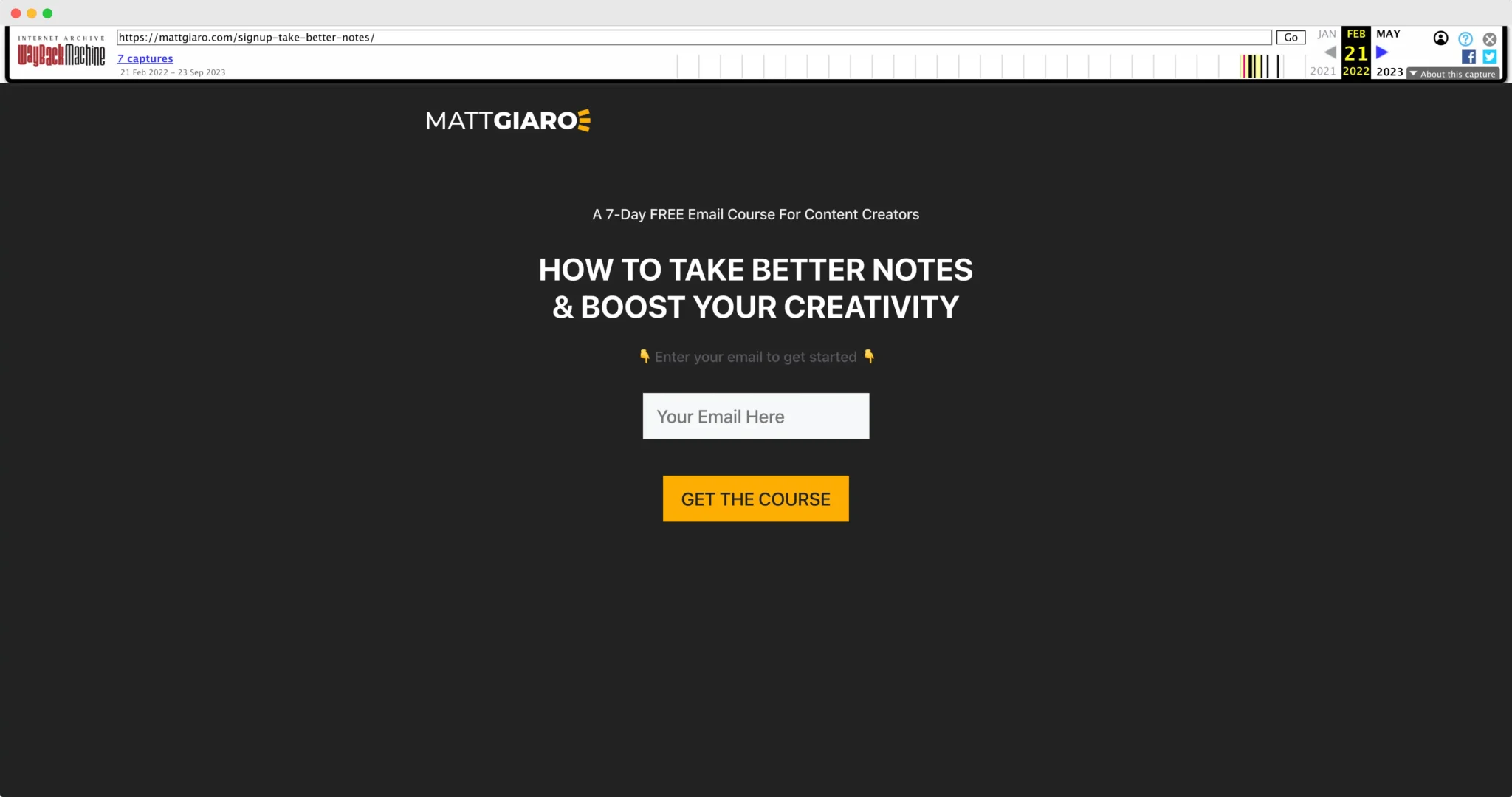
You need a page where people land and enter their email. That's it.
I've seen creators spend weeks designing landing pages with fancy animations and multiple sections. Meanwhile, they have zero subscribers.
Here's what your landing page actually needs:
- A headline that states the benefit of your lead magnet
- A brief description (2–3 sentences max)
- An email signup form
- Nothing else
Here's what my landing page looked like:
It's all about gathering real market feedback.
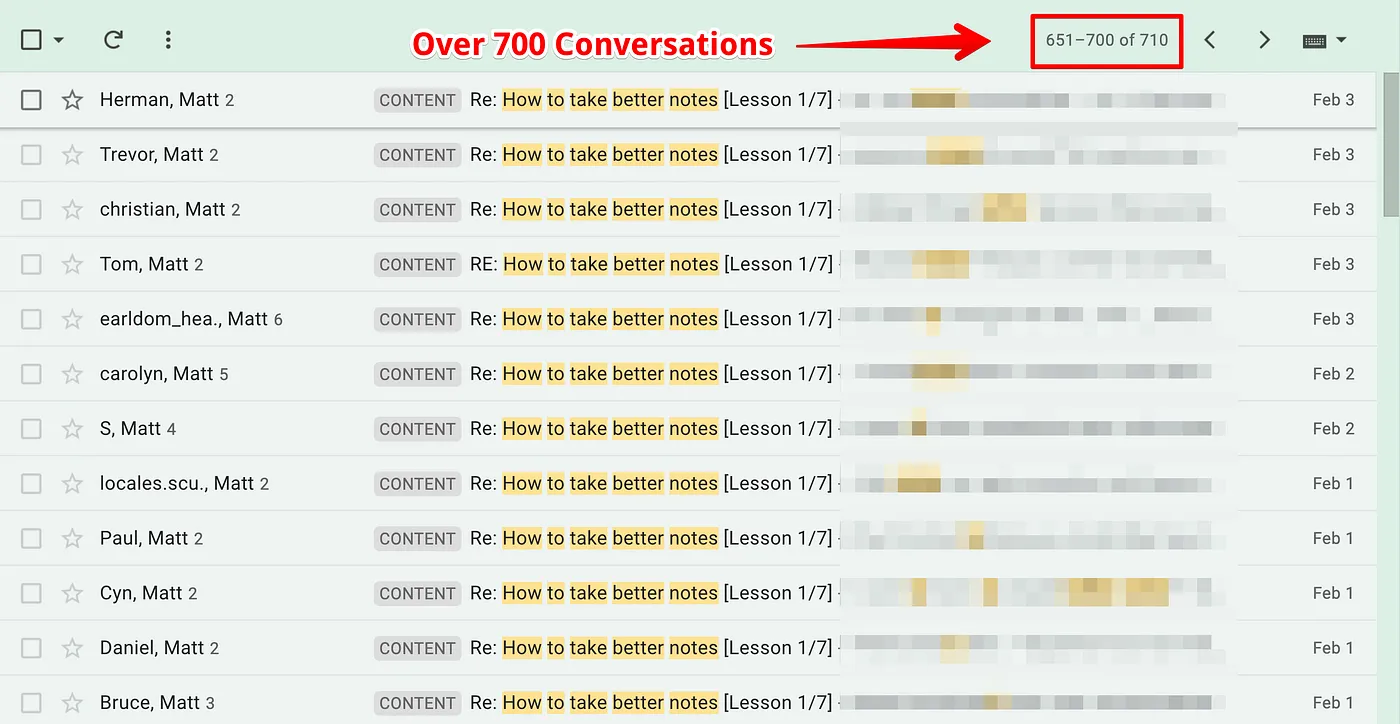
I started getting people on my email list and engaged with them. I read every email I got and replied personally to understand their needs better.
Since I only worked with articles that had proven engagement, the replies to my autoresponder emails were flooding in every day.
In the first 30 days, I answered more than 345 emails myself to ensure I got it right:
You can build this in Kit, MailerLite, AWeber, or any email platform in under 30 minutes. If you have a WordPress site, a simple page with a form works. If you're on Squarespace, Webflow, or Ghost — same thing.
The landing page isn't the bottleneck. Traffic to it is. Which brings us back to content.
Use Newsletter Sponsorships to Skip the Early Grind
Organic content is powerful but painfully slow when you're starting from zero.
There's a shortcut I wish I'd used earlier: paying other creators to feature your newsletter in theirs. Instead of spending months building an audience from scratch, you piggyback on creators who've already done that work — and tap directly into their subscriber base.
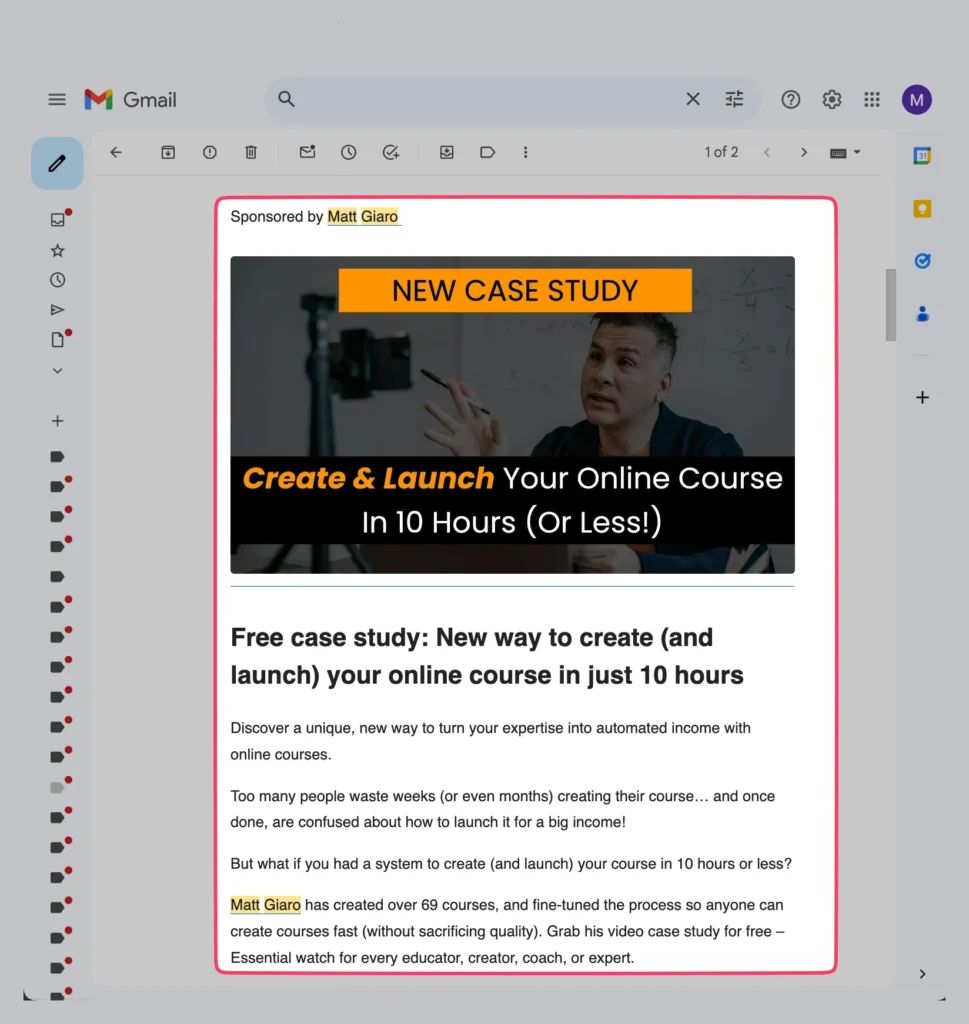
The mechanic is simple: find a newsletter in your niche, pay the owner a small fee to mention your lead magnet to their list, and watch new subscribers roll in the same day. No complicated setup. No waiting months for the algorithm to notice you. And it's far cheaper than running Meta or Google ads.
Imagine your list filling up with dozens — or even hundreds — of new subscribers each time you run one of these.
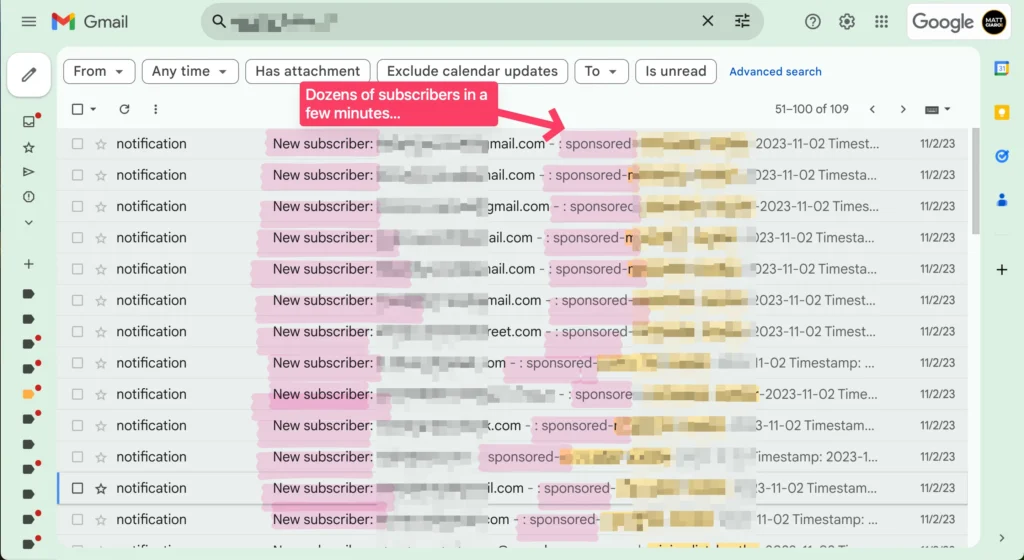
I've spent over $10,000 on newsletter sponsorships over the past two years and added well over 2,000 subscribers to my list that way. Most of those sponsorships paid for themselves.
Some real numbers:
- A $40 sponsorship brought in $294 in sales
- A $50 sponsorship brought in over $3,194 in sales
- A $100 sponsorship brought in $388 in sales
Not every sponsorship prints money like that. But the winners more than cover the losers.
The best part is psychological. When you have real subscribers waiting for your emails, you show up differently. You write better. You stay consistent. You stop feeling like you're shouting into an empty room.
To find sponsorship opportunities, look for creators in your niche who have email lists of 1,000–10,000 subscribers. Many of them accept sponsorships for $20–$100. It's the fastest way to go from zero to a real, engaged list.
Start Emailing Your List Immediately (Even With 10 Subscribers)
One of the biggest mistakes I see is creators who wait until they hit some magic number before sending their first email.
"I'll start emailing when I have 500 subscribers."
Meanwhile, those first 50 people who signed up? They've forgotten who you are. They flag you as spam. They unsubscribe.
Your list is like a garden. Neglect it and it dies.
Start sending at least one email per week the moment you get your first subscriber. It doesn't have to be a 1,200-word essay. A 300-word email sharing one idea, one insight, or one lesson is enough.
This does three things:
- Trains your subscribers to open your emails (which helps deliverability)
- Builds rapport so they trust you when you eventually launch
- Makes you better at writing emails — a skill that directly drives revenue
When I started, it took me an hour to write a 400-word email. The draft was terrible. I'd run it through Grammarly five times and agonize over the subject line for 20 minutes.
But I started. That's what mattered.
Set Up a Welcome Sequence That Sells on Autopilot
A welcome sequence is a series of pre-written emails that new subscribers receive automatically after they join your list.
This is where most creators leave money on the table — even before their "big launch."
Your welcome sequence has two jobs:
- Demonstrate that you know your stuff
- Train your list to buy from you
If you have even a small digital product, a coaching offer, or an affiliate product — include it in your welcome sequence. Don't apologize for selling. Your subscribers signed up because they have a problem. You're offering a solution.
A simple 5–7 email welcome sequence can generate consistent revenue on autopilot. I've found that if you have a solid content library driving traffic, half your sales can come from automated emails alone.
The key: each email should provide genuine value AND include a soft call to action. Think of it as a lesson that happens to mention your product — not a sales pitch wearing a lesson costume.
Build on Multiple Platforms (but Track What Works)
Once your primary platform is generating consistent subscribers, start repurposing content across other channels.
I publish on Substack, YouTube, Medium, and my blog. I also run newsletter swaps with other creators. All of this adds up.
On Substack alone, I added 6,123 subscribers in one year with a simple daily routine:
- Post 1 short-form note a day
- Publish 1 long-form article per week
- Interact with 10 other creators daily
Total time: about 45 minutes a day.
But here's where it gets interesting — and where most creators make a critical mistake.
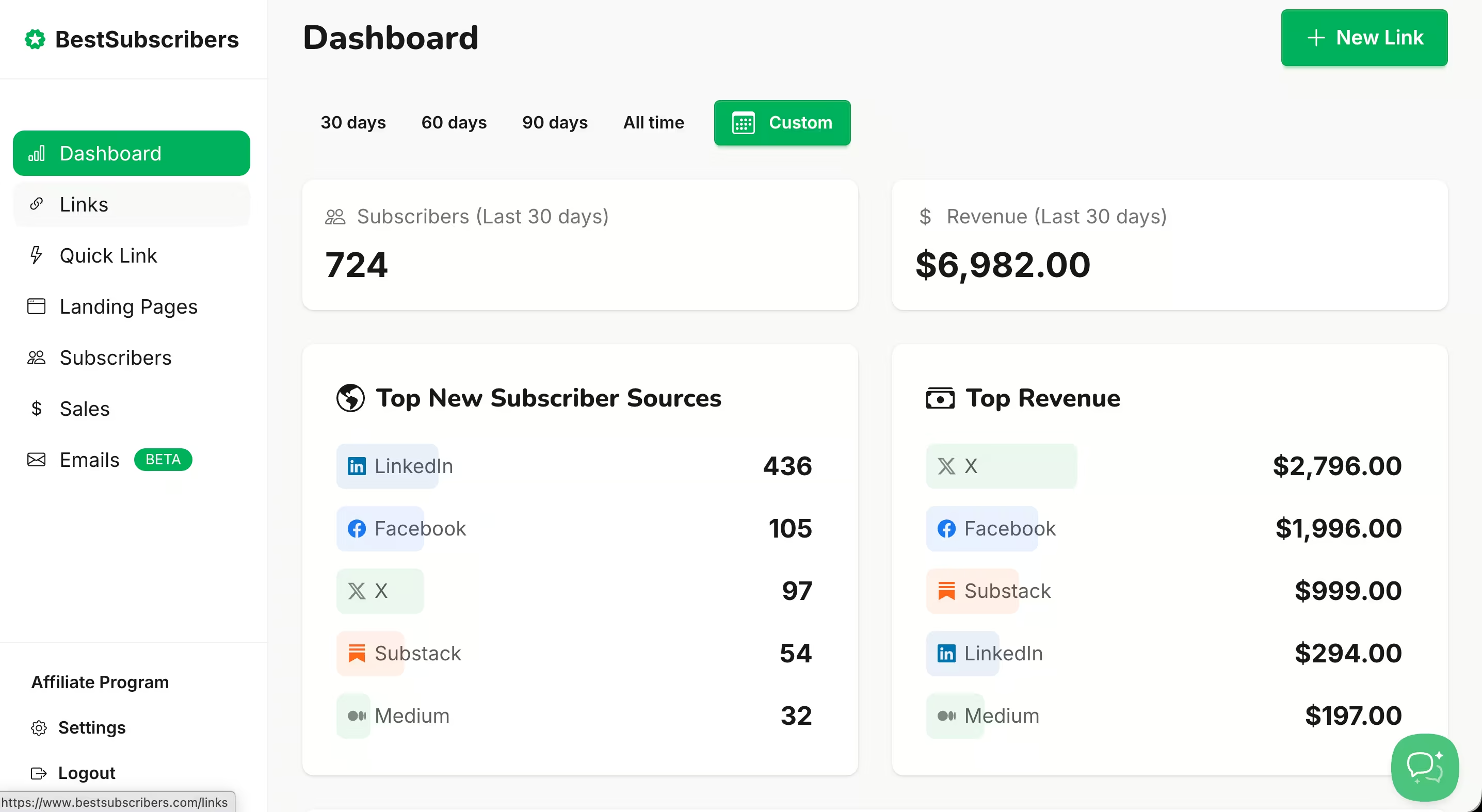
Not all subscribers are created equal. Some platforms bring subscribers who open your emails but never buy. Others bring fewer subscribers who spend thousands.
One of my YouTube videos had over 160,000 views. It generated zero customers.
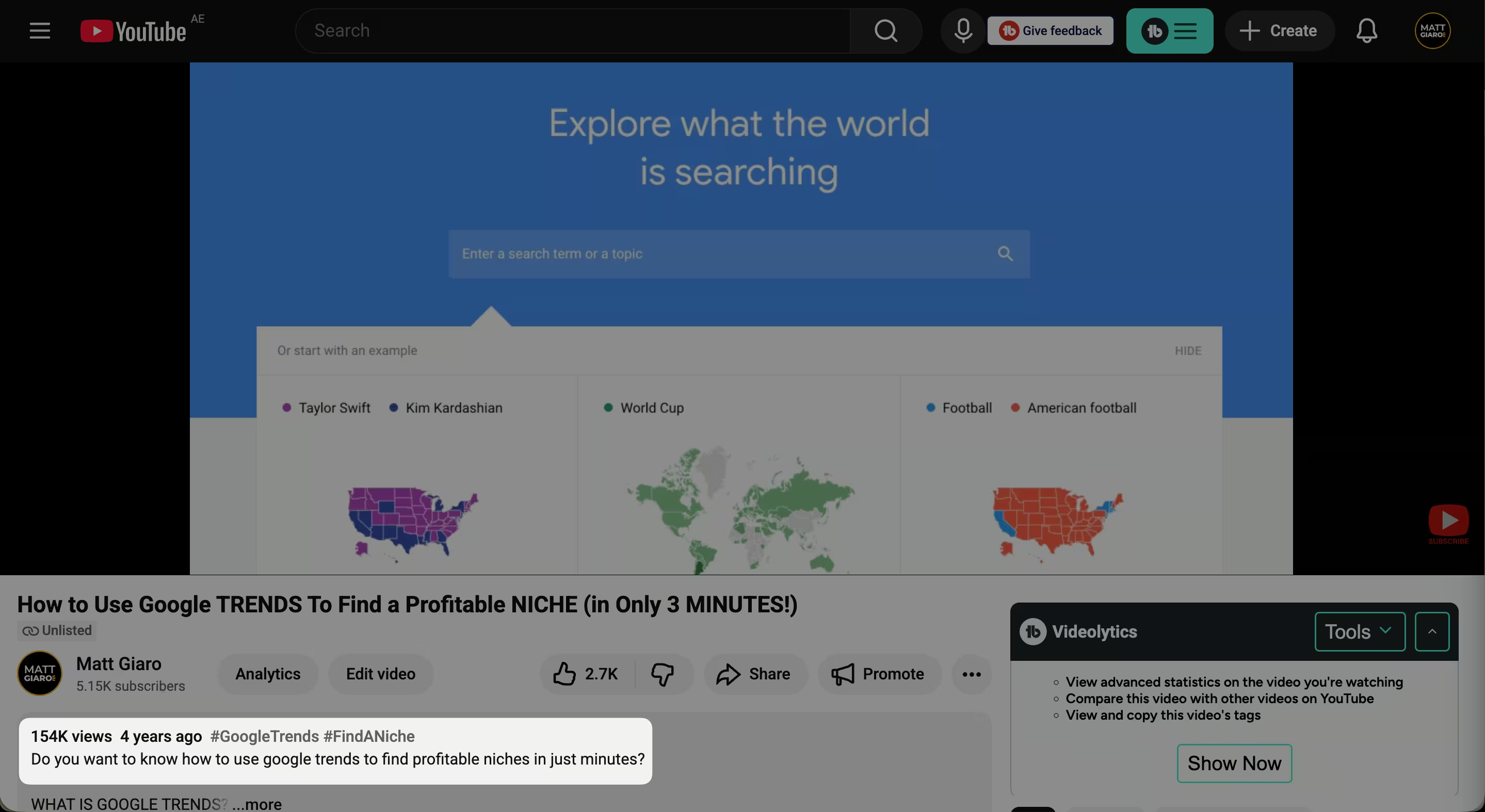
A different video with under 3,000 views generated thousands in revenue.
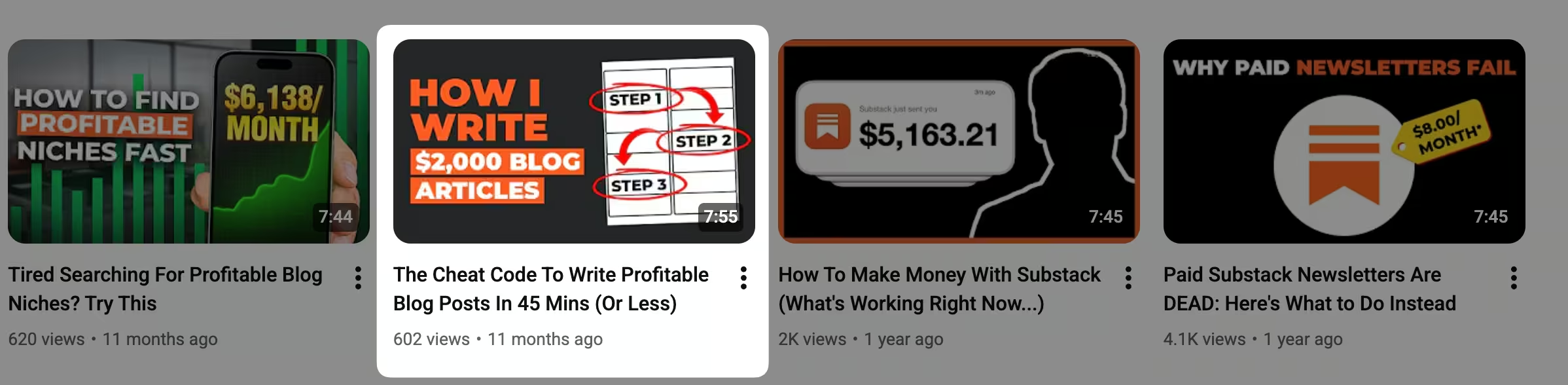
I ran a swap with another creator that brought in only 27 subscribers.
Sounds like a failure, right?
But one of those 27 spent over $1,500 on my products.
Without tracking which content brings subscribers who actually buy, you're making decisions based on vanity metrics. Views and subscriber counts feel good but don't pay the mortgage. (This is the core idea behind content attribution — connecting the dots between what you publish and what actually makes money.)
That's why I built BestSubscribers.
It connects the dots between content, email subscribers, and revenue — so you can see which blog post, YouTube video, or newsletter swap actually made you money.
Not just which one got the most clicks.
The "Audience First" Timeline (Realistic Expectations)
Let me set honest expectations. The first 8 months are the hardest.
You'll feel invisible. You'll wonder if anyone's paying attention. You'll question whether you picked the right niche.
Here's a realistic timeline based on my experience and what I've seen with clients:
- Month 1–2: You're figuring out your content rhythm. Expect 0–100 subscribers. This phase is about getting reps in, not results.
- Month 3–4: Your content starts gaining traction on your chosen platform. If you're using sponsorships, you can accelerate this to 300–500 subscribers.
- Month 5–6: With consistent publishing and a good lead magnet, 1,000–3,000 subscribers is realistic. This is launch territory.
- Month 7+: Layer in additional platforms. SEO starts compounding. My SEO-optimized articles now bring in about 250 visitors per day and add roughly 200 new subscribers every month — without me lifting a finger.
The compounding effect is real. It's just not instant.
What Most "Build Your List" Guides Get Wrong
Most articles about building an email list before a launch focus on tactics: pop-up forms, Facebook ads, giveaways, referral programs.
Those tactics aren't wrong. But they miss the bigger picture.
The creators who build profitable email lists do two things differently:
1. They build the list around a specific transformation, not a generic topic.
"Join my newsletter" is not a reason. "Learn how to organize your notes so you can create content twice as fast" — that's a reason. Every subscriber on your list should know exactly what they signed up for and why it matters to them.
2. They track quality, not just quantity.
50 qualified subscribers who open your emails, click your links, and eventually buy from you are worth more than 1,000 ghosts who signed up for a giveaway and never opened a single email.
This is where most list-building advice falls apart. It tells you how to get more subscribers but not how to get better ones.
With BestSubscribers, I can see exactly which content piece brought each subscriber — and whether they went on to purchase. That data shapes every content decision I make. When you know your Medium articles bring buyers but your viral tweets bring freeloaders, you stop wasting time on the wrong platform.
Don't Wait for "Ready"
If you're reading this and you haven't started building your email list yet — start today.
Not when your course is finished. Not when your website is perfect. Not when you feel like an expert.
Pick a platform. Create one lead magnet. Publish your first piece of content. Set up your email tool.
The data you start collecting today becomes the foundation for every launch, every product, and every business decision you make from here on out.
I waited too long on some of these steps. Don't make the same mistake.
If you want to track where your subscribers come from — and which ones actually turn into revenue — start your free trial of BestSubscribers. Setup takes 15 minutes. After that, it runs in the background while you focus on creating.
A common benchmark is 1,000–3,000 subscribers for a course launch, based on a 1–3% conversion rate. If your course is $300 and you want $9,000 in launch revenue, you need about 3,000 subscribers at a 1% conversion rate. But quality matters more than quantity — 500 engaged subscribers who trust you can outperform 5,000 cold ones.
Yes. Most email platforms (Kit, MailerLite, AWeber) let you create hosted landing pages and signup forms without a website. You can drive traffic from social media, podcast appearances, or newsletter sponsorships directly to these pages. A website helps long-term — especially for SEO — but isn't required to start.
With consistent content creation and a good lead magnet, reaching 1,000 subscribers in 3–6 months is realistic. Newsletter sponsorships can accelerate this timeline significantly. I built 3,000 subscribers in about five months through Medium articles alone — no paid ads. The timeline depends heavily on how often you publish and whether you're on a platform where your audience already spends time.
There's no single best platform — it depends on what kind of content you enjoy creating. Medium and Substack work well for writers. YouTube works for people comfortable on camera. The key is picking one platform, committing to consistent publishing, and making sure every piece of content has a clear call to action pointing to your email list.
Paid ads can work, but they're not necessary — especially when you're just starting. I built my first 3,000 subscribers entirely through organic content. Newsletter sponsorships are a lower-risk paid option: you pay another creator $20–$100 to feature your newsletter, and you get targeted subscribers who already read email. Save Facebook and Google ads for later when you have a proven funnel.

Ready to see which content makes you money?
Stop guessing. Start tracking content to revenue.
Start Free Trial