 BestSubscribers
Should I Start a Blog in 2026? (By A Blogger)
Starting a blog in 2026 is one of the best moves a creator can make — if you use it to build an email list and sell your own products.
Not to chase ad revenue. Not to collect pageviews. And definitely not to compete with AI-generated content farms.
I've been blogging since 2012.
My blog pulls 8,000–10,000 visitors per month on autopilot. It adds roughly 200 email subscribers to my list every month — without me touching a keyboard.
Some of those blog posts from years ago still bring in customers today.
But I've also written posts that got thousands of views and zero email subscribers. And others that barely got traffic but filled my list with people who eventually bought.
The difference? Knowing which articles actually drive subscribers — so you double down on the right topics and stop wasting time on the wrong ones.
This guide covers who should start a blog in 2026, who shouldn't, and why most blogging advice misses the one metric that actually matters.
Blogging Is Not Dead — But the Old Model Is
Every year, someone declares blogging dead.
Every year, they're wrong — and right at the same time.
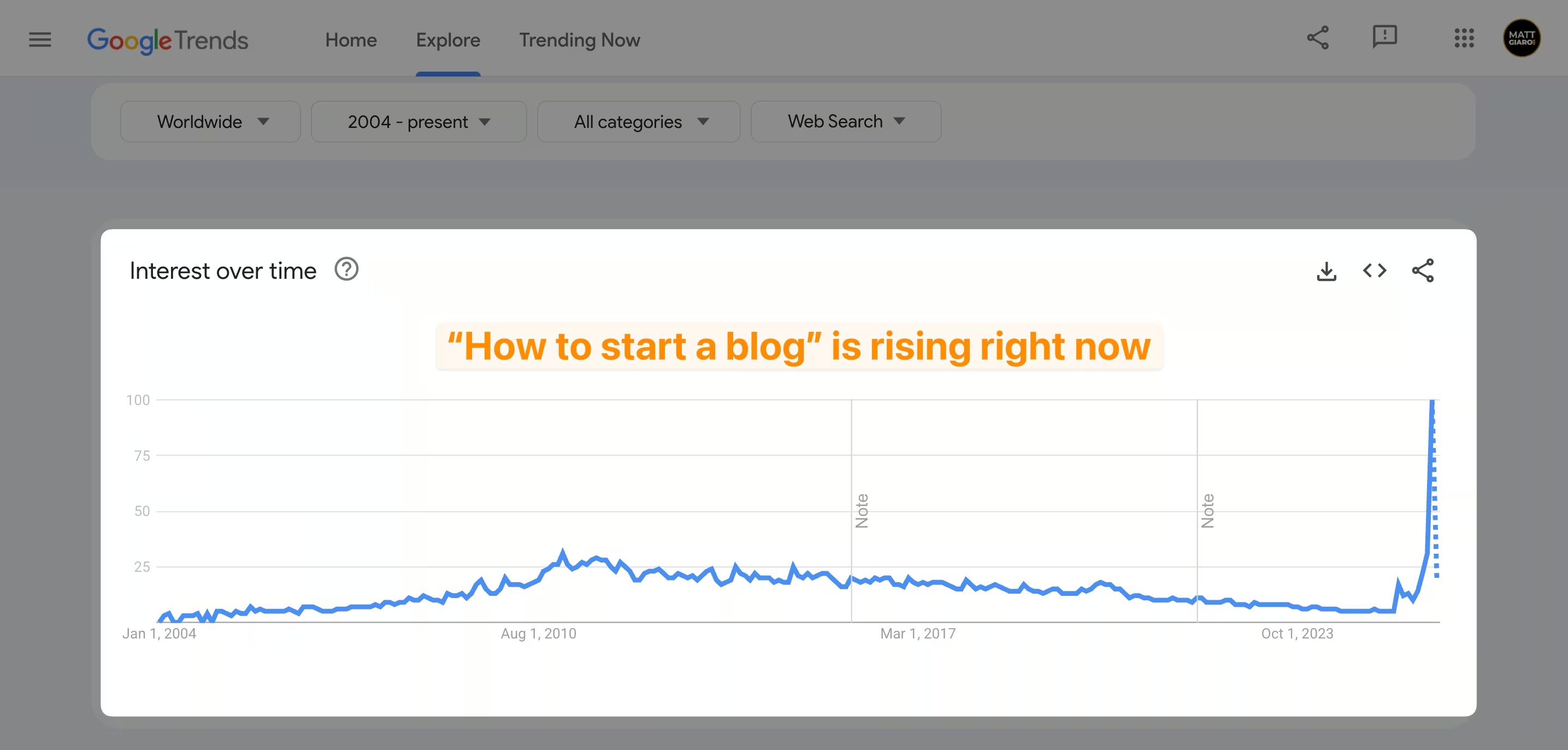
The old blogging model — write keyword-stuffed articles, slap on display ads, collect pennies per pageview — is dying. Google's AI Overviews are eating informational queries. Ad rates are declining. Competition from AI-generated content is making it harder to rank generic "top 10" articles.
But the new blogging model is thriving.
Because now people don't just want quick answers. They actually want things grounded by people who've actually done it.
So yeah, in 2026, you still write blog posts optimized for search.
Google (and AI tools like Perplexity, ChatGPT, or Claude) send you free traffic by quoting you as a source:
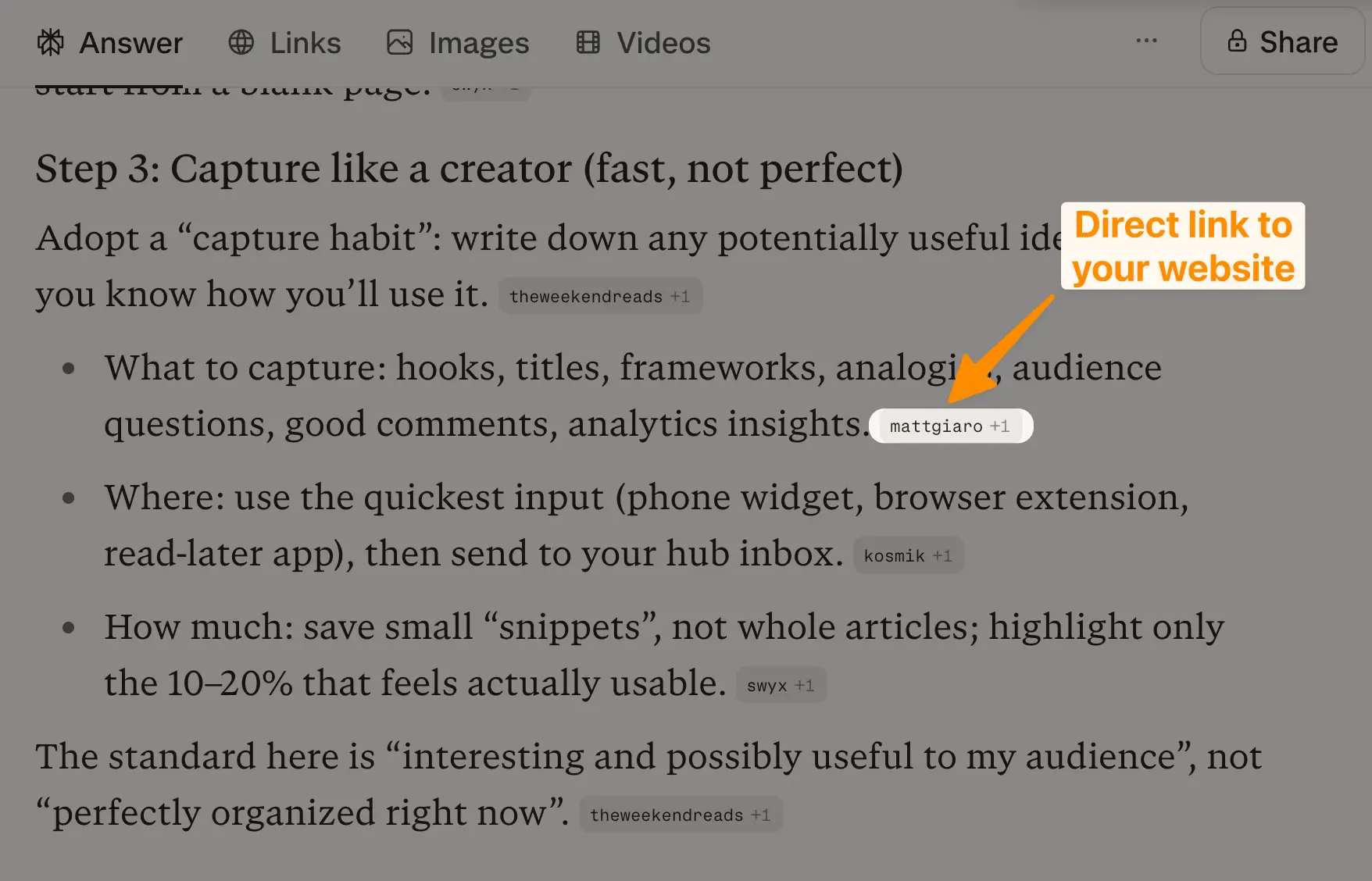
A percentage of those visitors subscribe to your email list. Then you sell your own products — courses, coaching, digital products — to that list.
In this model, your blog isn't the business.
It's the front door to your business.
The Real Reason to Start a Blog: Passive Traffic That Builds Your Email List
Social media requires you to show up every day.
The moment you stop posting, your reach drops.
A blog post works the opposite way.
You write it once. If it's optimized for search, Google sends you traffic for months or years. That traffic hits your landing page. Some percentage opts in to your email list.
Then your email sequence does the selling.
My SEO-optimized articles bring in roughly 250 visitors per day. About 1–3% of them subscribe.
That's 200+ new email subscribers every month — on complete autopilot, without me turning on my computer.
Compare that to social media: I'd need to post daily, engage with replies, chase the algorithm — and the second I stop, the traffic stops too.
If you're working a full-time job or running a business and building a content business on the side, this matters.
You don't have four hours a day for social media. You need content that works while you sleep.
That's what a blog does when it's set up correctly.
Who Should Start a Blog in 2026
A blog makes sense if:
- You enjoy writing long-form content. This sounds obvious, but it's the single biggest predictor of success. I've tried podcasts and video. I like them. But I don't like producing them every day. Writing is the format I can sustain — and sustainability is the cheat code.
- You want to build an email list. A blog without an email list is a hobby. A blog with an email list is a business. Every piece of content you publish should have one job: get the right person to subscribe.
- You sell (or plan to sell) your own products. Courses, coaching, memberships, digital products — a blog drives the most qualified leads for these. Someone who Googles a specific problem, reads your in-depth article, and then subscribes to your list is a far better lead than a random social media follower.
- You're willing to wait 3–6 months for results. SEO compounds over time. If your website is brand new, you won't see real traction for 3–6 months. If your site already has some authority, new posts can rank in 24–48 hours. Either way, it's a long game.
- You want to own your platform. Your blog is the only piece of real estate you actually own on the internet. Substack can change their terms. Medium can kill your account. X can throttle your reach. Your self-hosted blog? Nobody can take that from you.
Who Should NOT Start a Blog
A blog is the wrong choice if:
- You hate writing. No amount of SEO strategy will compensate for dreading the work. If writing feels like pulling teeth, look at YouTube or podcasting instead. The best content format is the one you can do consistently.
- You need revenue in 30 days. Blogging is a slow burn. If you need income this month, start with freelancing, consulting, or direct outreach. Build the blog on the side.
- You're chasing ad revenue. The "write articles → get traffic → earn from display ads" model requires massive volume (think 100,000+ monthly pageviews) to generate meaningful income. For solo creators selling their own products, you can generate more revenue from 500 email subscribers than from 50,000 monthly pageviews.
- You only plan to publish on Medium or Substack. These platforms are fine for distribution, but they're not a substitute for your own blog on your own domain. They can shut you down, change their algorithm, or deprioritize your content at any time. I've had it happen to me with Facebook — I was "totally compliant" and still lost my reach overnight.
Blogging vs. Social Media: Do Both
Most guides frame this as blogging versus social media.
That's the wrong frame. You should do both.
Your blog captures search traffic — people actively searching a problem you solve.
Social media helps you:
- reach more people,
- connect with other creators,
- and open doors for collaborations.
They serve different purposes.
And the smartest approach is to start with one format you enjoy, then convert it into the other.
If you love writing long-form, start with blog posts. Then chop them into short-form social posts — a key insight becomes a tweet, a subheading becomes a LinkedIn post, a paragraph becomes a Substack Note.
If you prefer short-form, start there.
Then expand your best-performing posts into full blog articles that rank on Google.
This is exactly what I do on Substack (a micro-blogging platform).
I write one long-form article per week, then repurpose it into short-form Notes using a tool called StackSweller.
That combination — plus engaging with other writers on the platform — grew my Substack from zero to over 9,000 subscribers in about 13 months.
My best month?
I posted daily articles and added over 1,000 new email subscribers in a single month.
Even on slower months, the system consistently brings in 300–500 new subscribers.
And the whole thing takes about 45 minutes a day.
The blog post does the heavy lifting — it attracts people who are actively searching for what you offer. Social media amplifies it and introduces you to people who weren't searching yet.
The key difference is what happens when you stop.
If you stop posting on social media, your traffic vanishes within days. If you stop publishing blog posts, your existing posts keep driving traffic for years.
That's the beauty of doing both: social media gives you speed, blogging gives you longevity.
For a creator with limited time — maybe you're writing before work, after the kids are in bed, on weekends — start with the format you enjoy most. Then repurpose into the other. You don't need to create twice the content. You need to use the same content twice.
What About AI? Is Google Sending Less Traffic to Blogs?
This is the question everyone asks.
And the honest answer is: it depends on what you're writing about.
Yes, Google's AI Overviews are summarizing simple factual queries.
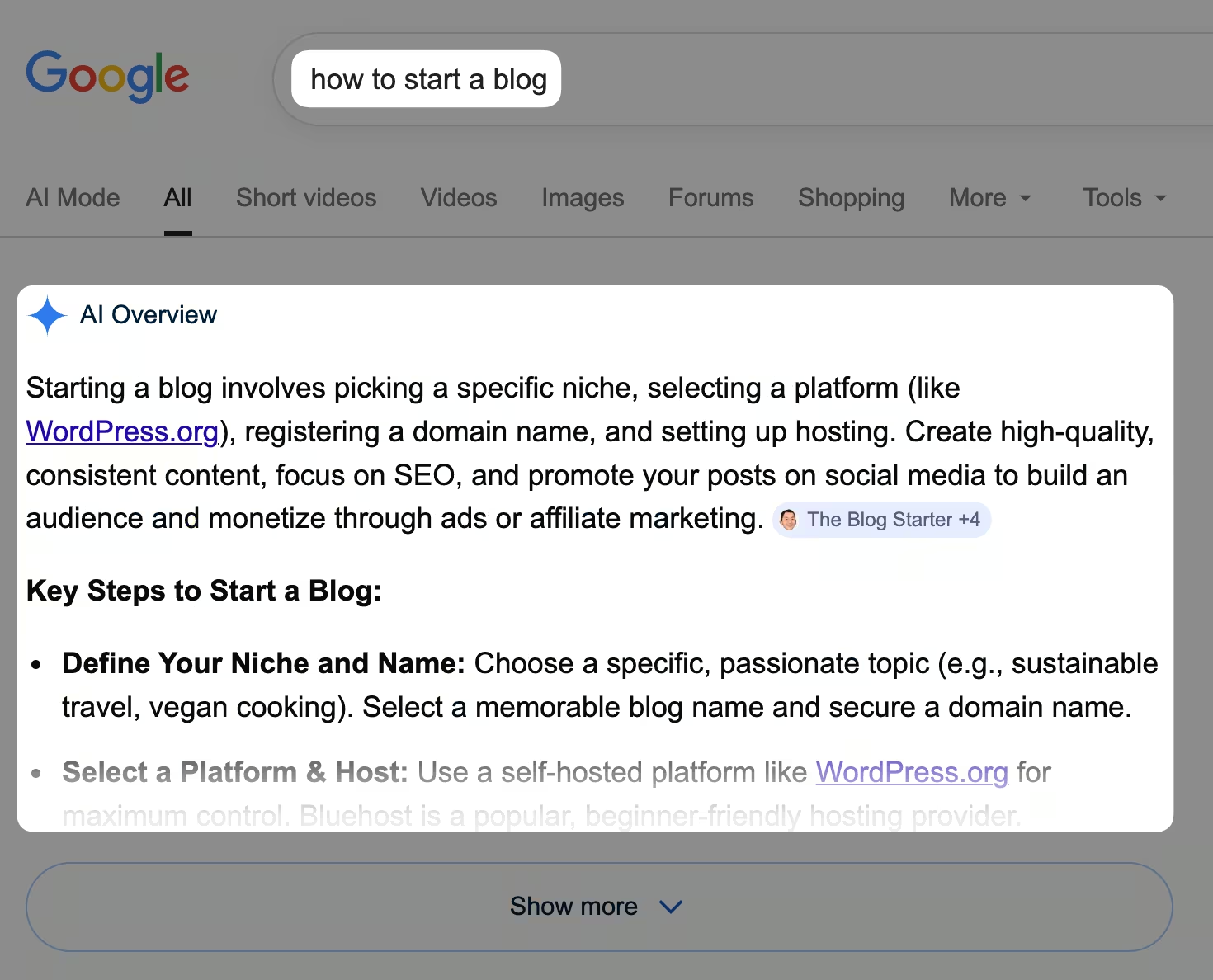
If your blog post just answers "what is X?" or "how to do commodity" — AI can handle that without sending the user to your site.
But AI can't replicate personal experience. It can't share your specific results. It can't tell your story about working with clients for 15 years and discovering what actually works.
Google's algorithm now prioritizes E-E-A-T:
- Experience
- Expertise
- Authoritativeness
- and Trustworthiness
Blog posts written by a real person with real experience outperform generic AI-generated content.
And here's something most "blogging is dead" people miss: AI tools themselves are becoming a traffic source.
Perplexity, ChatGPT with search, and other AI tools cite blog posts when answering complex questions. If your content is structured well, with specific data and named frameworks, AI tools will reference your work and send traffic your way.
Adobe acquired SEMrush — one of the biggest SEO platforms — for $1.9 billion in November 2025.
If SEO were dying, that deal wouldn't have happened.
The Metric Nobody Talks About: Which Blog Posts Actually Bring Subscribers?
This is where most blogging advice completely falls apart.
Every guide tells you to check your Google Analytics, look at your top pages by traffic, and "create more of what works."
But traffic and subscribers are often completely different things.
I have blog posts with hundreds of thousands of views that brought in zero email subscribers. And posts with fewer than 3,000 views that filled my list with people who actually bought.
If I'd followed the standard advice — double down on high-traffic posts — I would have invested months writing content that looks successful but builds nothing.
Here's the thing about blogging as a list-building strategy: each blog post is a different door into your business.
You might have an article about "how to price your online course" with a lead magnet about launch checklists. Another article about "choosing a course platform" with a comparison guide as the opt-in. A third about "email sequences for course creators" with a template pack.
Different articles. Different lead magnets. Different types of subscribers walking through different doors.
The question is: which doors are actually working?
Some articles will rank on Google and bring steady traffic — but nobody opts in. The topic attracts browsers, not buyers-in-waiting.
Other articles might get modest traffic, but every visitor is a perfect match for your lead magnet. Those are the ones that quietly build a list of people who eventually spend money.
Without attribution data, you can't tell the difference.
You'll keep publishing on topics that feel productive (traffic is up!) while ignoring the ones that actually grow your business.
The problem is that standard analytics tools can't connect the dots.
Google Analytics tells you which pages get traffic. Your email platform tells you who subscribed. But neither tells you: "This blog post brought 47 subscribers this month, and 3 of them bought your course."
I tried to solve this myself for years. Spreadsheets. UTM parameters. Zapier automations held together with duct tape.
Even then, at least 30% of my subscriber sources went untracked.
That's exactly why I built BestSubscribers. It tracks which blog post (or any piece of content) brought each subscriber, and whether that subscriber became a paying customer.
You see exactly which articles are filling your list — and which ones are just generating pageviews that go nowhere.
Set it up once in 15 minutes. Then it runs in the background while you focus on creating the right stuff.
When you're squeezing content creation into a few hours per week, this is the difference between spending months on the wrong topics and knowing exactly where to invest your limited time.
How to Start a Blog That Actually Generates Revenue
If you've decided a blog is right for you, here's the framework that works in 2026:
Pick a specific topic you can write about for years. Not "lifestyle." Not "business." Something specific enough that readers instantly know if it's for them. "Gardening for apartment dwellers." "Career transitions for professionals over 40." "Photography for real estate agents."
The more specific, the easier it is to rank — and the more qualified your subscribers will be.
Build on your own domain. WordPress, Ghost, or Webflow on your own hosting. Not Medium. Not Substack (though you can cross-post there).
Your blog, your rules.
Install an email opt-in from day one. Before you write a single blog post, set up your email platform (Kit, MailerLite, AWeber — any of them work) and create a simple lead magnet.
As your blog grows, you'll want different lead magnets for different articles. A "course pricing guide" on your pricing article. A "platform comparison sheet" on your tech stack article. Each article becomes a different entry point into your email list — and different entry points attract different types of subscribers.
Every blog post should funnel readers toward your email list.
Write one SEO-optimized post per week. Consistency beats volume. One well-researched post per week gives you 52 pieces of search-ready content by the end of the year.
Each one is a potential traffic source for years.
Measure what matters. Not pageviews. Not bounce rate. Track which blog posts actually bring email subscribers — and which subscribers eventually buy.
This tells you which topics to keep writing about and which ones to drop.
The Realistic Timeline: What to Expect
Here's what an honest blogging timeline looks like for someone starting in 2026:
Months 1–3: You're publishing weekly. Traffic is minimal (maybe 5–20 visits per day). You might get a handful of subscribers.
This is the phase where most people quit. Don't.
Months 3–6: Google starts indexing your content. Some posts begin ranking on page 2 or 3. Traffic slowly climbs. You're getting 10–50 subscribers per month.
Months 6–12: Your best posts break into page 1. Traffic compounds. You're getting 50–200+ subscribers per month.
If you have a product, your first sales from blog-originated subscribers start coming in.
Year 2+: Your content library is working for you. Older posts continue driving traffic. New posts rank faster because your domain has authority.
The flywheel is spinning.
This timeline assumes you're writing one quality, SEO-optimized post per week. If you publish less frequently, stretch it out. If your site already has authority, compress it.
The point is: blogging rewards patience.
It's planting fruit trees, not growing tomatoes.
Should You Start a Blog in 2026? The Short Answer
Yes — if you're building a business around your expertise, you enjoy writing, and you're willing to treat it as a long-term investment.
No — if you need fast results, hate writing, or plan to monetize through display ads alone.
The best version of blogging in 2026 isn't about becoming a "blogger."
It's about using blog content as a passive traffic engine that feeds your email list with qualified subscribers — people who searched for a specific problem, found your answer, and trusted you enough to subscribe.
The question most creators never think to ask is: once you have 30, 50, 100 articles out there — which ones are actually bringing in the subscribers who buy?
That's the question that changes how you blog.
No. The landscape is more competitive than 2012, but the tools and strategies available are also better. If you pick a specific niche, write from personal experience, and optimize for search, a new blog can start ranking within 3–6 months. The key is writing content that AI can't replicate — content rooted in your actual expertise and experience.
Bare minimum: about $50–100/year for hosting and a domain name. WordPress is free. Most email platforms have free tiers for your first few hundred subscribers. You don't need expensive themes, plugins, or tools to start. Keep it lean until you have traction.
For a creator selling their own products (courses, coaching, digital products), expect 6–12 months before you see consistent revenue from blog-originated subscribers. This depends heavily on your niche, your offer, and how consistently you publish. The ad-revenue model takes even longer — typically 12–24 months to reach meaningful income.
Both. But your own site is the foundation. Substack and Medium give you built-in audiences and distribution — Medium has close to 100 million monthly readers, and Substack lets you collaborate with other writers for cross-recommendations. Use them for distribution. But always publish the definitive version on your own domain, where you control the SEO value and the email opt-in experience.
It depends on your strengths. Blogging is better if you enjoy writing and want passive, search-driven traffic. YouTube is better if you're comfortable on camera and want faster initial growth through recommendations. Many creators do both — blog posts rank on Google, YouTube videos rank on YouTube, and both feed the same email list. For a detailed comparison, read our guide on YouTube vs podcast: which actually drives paying subscribers?.
Standard analytics tools (Google Analytics, email platform dashboards) can't connect a specific blog post to a specific subscriber. You need attribution tracking that follows the full chain: article → subscriber → buyer. BestSubscribers does exactly this — it shows you which content brought each subscriber, which lead magnets are converting, and whether those subscribers eventually buy. Set it up once, and it runs automatically in the background.

Ready to see which content makes you money?
Stop guessing. Start tracking content to revenue.
Start Free Trial