 BestSubscribers
Which Content Brings the Most Email Subscribers? (And How to Track It)
The content that brings you the most email subscribers is almost never the content you think.
After 14 years of creating content across YouTube, blogs, social media, and newsletters — and tracking every subscriber back to the source — I've seen blog posts with 200 views outperform YouTube videos with 160,000+ views. I've seen a single tweet bring in a subscriber who spent $1,500 within weeks, while a "viral" LinkedIn thread brought in hundreds of subscribers who never opened a single email.
Below: a breakdown of which content types actually drive email subscribers, what the data says about each one, and how to figure out which content works for you — not just in theory.
Blog Posts Still Drive the Most Consistent Email Signups
Blogs remain the single most reliable email subscriber channel for solo creators.
The reason is simple.
Blog posts rank in Google and AI search.
Which means they attract people who are actively searching for something specific. A searcher typing "how to set up a home studio" is already problem-aware. They're primed to exchange their email for a solution.
According to HubSpot's research, companies with 16+ blog posts per month get 3.5x more traffic than those publishing 0–4 posts. And traffic from search has a built-in intent advantage over social media traffic — these visitors came looking for something, not scrolling past it.
But the key to making blog posts convert into subscribers isn't more posts.
It's matching the opt-in to the content.
A generic "subscribe to my newsletter" box converts at roughly 0.5%. A content-specific lead magnet — like a checklist that complements the article the reader just finished — converts at 10–15% or higher.
But here's the part most "grow your list" advice skips: conversion rate alone doesn't tell you which blog posts bring subscribers who buy. A post with a 15% opt-in rate sounds great — until you realize none of those subscribers ever opened their wallets. Without tracking the full chain from content to subscriber to purchase, you're optimizing for a number that might not matter.
YouTube Videos Build Trust, But Conversion Takes Extra Steps
YouTube is a powerful awareness channel. But it's a terrible direct email list builder — unless you're intentional about it.
The challenge is structural.
YouTube doesn't want people to leave the platform. There's no native email capture. No inline opt-in form. Links in descriptions get buried below the fold. Your audience has to actively decide to stop watching, click a link, navigate to a landing page, and type in their email.
That said, YouTube subscribers who do make that jump tend to be high-quality. They've seen your face, spent 5–20 minutes with you, and self-selected by clicking through.
Creators who add a clear CTA with a compelling lead magnet at the end of their videos — and pin the link in the first comment — report conversion rates between 2–5% of total views.
The catch: YouTube's analytics will show you views, watch time, and subscriber count. What it won't show you is which video brought a specific email subscriber who later bought your course.
That's the data gap most creators don't even know exists.
Social Media Posts Drive Spikes, Not Sustained List Growth
X (Twitter), LinkedIn, Instagram, and Facebook can produce dramatic subscriber spikes. A viral thread or carousel can bring in hundreds of email signups in 48 hours.
But social media has two problems as a list-building channel.
The traffic is ephemeral. A tweet has a lifespan measured in hours. A LinkedIn post might get traction for 2–3 days. Then it's gone. Unlike a blog post that compounds traffic over months or years, social media content has to be constantly replaced.
The subscribers tend to be lower quality on average. They subscribed on impulse because your post was clever or entertaining — not because they had a specific problem they needed solved.
That doesn't mean every social subscriber is a tire-kicker. It means you can't tell the difference without tracking subscriber behavior downstream.
The creators who make social media work for list building do two things consistently: they post native value first (not "hey, subscribe to my newsletter"), and they pitch their email list as the logical next step after delivering that value.
Podcast Episodes Build Deep Relationships But Are Hard to Track
Podcasting is the sleeper channel for email list growth.
Listeners spend 20–60 minutes with your voice in their ears, often while commuting or exercising. That kind of sustained attention builds trust faster than almost any other medium.
The problem? Podcast-to-email attribution is notoriously difficult.
Listeners hear your CTA while driving. They might visit your landing page hours later — or never. There's no clickable link in an audio file.
Some creators work around this with vanity URLs (like "yoursite.com/podcast") or dedicated landing pages per episode, but tracking remains spotty at best.
Despite the tracking challenges, podcasters who consistently mention their lead magnet and provide a simple URL report steady list growth of 5–15 new subscribers per episode — even with modest download numbers.
Newsletter Swaps and Cross-Promotions Can Surprise You
Newsletter swaps — where two creators recommend each other to their respective lists — can produce wildly inconsistent results. Some swaps bring in hundreds of subscribers. Others bring in a handful.
The difference comes down to audience alignment.
A swap with a creator in an adjacent niche who serves a similar audience can bring in subscribers who are already primed to buy. A swap with a large but loosely related newsletter might bring in volume with no downstream revenue.
I once ran a newsletter swap that brought in just 27 subscribers. By traditional metrics, that looks like a failure.
But one of those 27 spent $1,500 within weeks.
Without tracking each subscriber back to the source and connecting that to revenue, I would have written off the swap and never done another one.
Guest Posts and Collaborations Still Work (When Targeted)
Writing a guest post on a high-traffic blog in your niche can produce a steady drip of subscribers for months — especially if the blog ranks well in search.
The problem is that most blogs don't let you embed your own opt-in form. You're limited to a link in your author bio. That means conversion depends almost entirely on how compelling your bio and lead magnet are.
Collaborations — podcast guest appearances, co-hosted webinars, joint workshops — work on the same principle. You're borrowing someone else's trusted audience. The subscribers you get tend to be warmer because they came with a personal recommendation attached.
The tracking challenge with collaborations is the same as with podcasts: the subscriber journey crosses platforms.
Someone hears you on a podcast, Googles your name two days later, and lands on your homepage.
Without attribution, that subscriber looks organic — and the collaboration that actually brought them in gets zero credit.
Webinars and Workshops Convert at the Highest Rate
If you're measuring by pure opt-in conversion rate, webinars and live workshops win.
Registration pages for free webinars commonly convert at 20–40%. Far higher than any other content type.
The tradeoff is effort. A webinar requires preparation, scheduling, promotion, and live delivery. It's a campaign, not a content piece. You can't run one every week the way you can publish a blog post.
But for creators who sell courses, coaching, or high-ticket services, a single well-promoted webinar can add 200–500 subscribers in a day — and those subscribers are pre-qualified because they committed time to attend.
The Content Type Matters Less Than You Think
Every channel can bring email subscribers. Blogs, YouTube, social, podcasts, webinars, collaborations — they all work.
The question isn't which channel works in general.
The question is which channel works for you.
And the uncomfortable truth is: most creators have no idea.
You can read all the "top 10 ways to grow your list" articles you want. You can implement every tactic — exit-intent popups, content upgrades, social CTAs, vanity URLs.
But if you can't see which specific piece of content brought a specific subscriber who later became a buyer, you're optimizing with a blindfold on.
Why Most Creators Can't Answer "Which Content Works?"
The tools creators currently use aren't built to connect content to subscribers to revenue.
Google Analytics shows you traffic — pageviews, bounce rates, session duration. It tells you which pages get visited. It does not tell you which page brought a subscriber who later purchased your $297 course.
Your email platform (Kit, MailerLite, AWeber) shows you subscriber counts, open rates, and click rates. It does not show you which YouTube video or blog post originally brought that subscriber to your list.
Stripe or Teachable shows you revenue — who paid, how much, when. It does not connect that payment back to the content that started the relationship.
Each tool handles one piece of the chain. No single tool connects the full picture: content → subscriber → purchase.
I tried to solve this myself for years. UTM parameters. Spreadsheets. Zapier automations. Even with all of that, at least 30% of my revenue went untracked.
People subscribe with one email and buy with another. They use VPNs, ad blockers, open links in incognito mode. Manual tracking breaks the moment you forget to tag one link.
The Question That Actually Matters
"Which content brings the most email subscribers?" is a good question.
But a better one: "Which content brings subscribers who actually buy?"
That's a completely different question. And the answer is often counterintuitive.
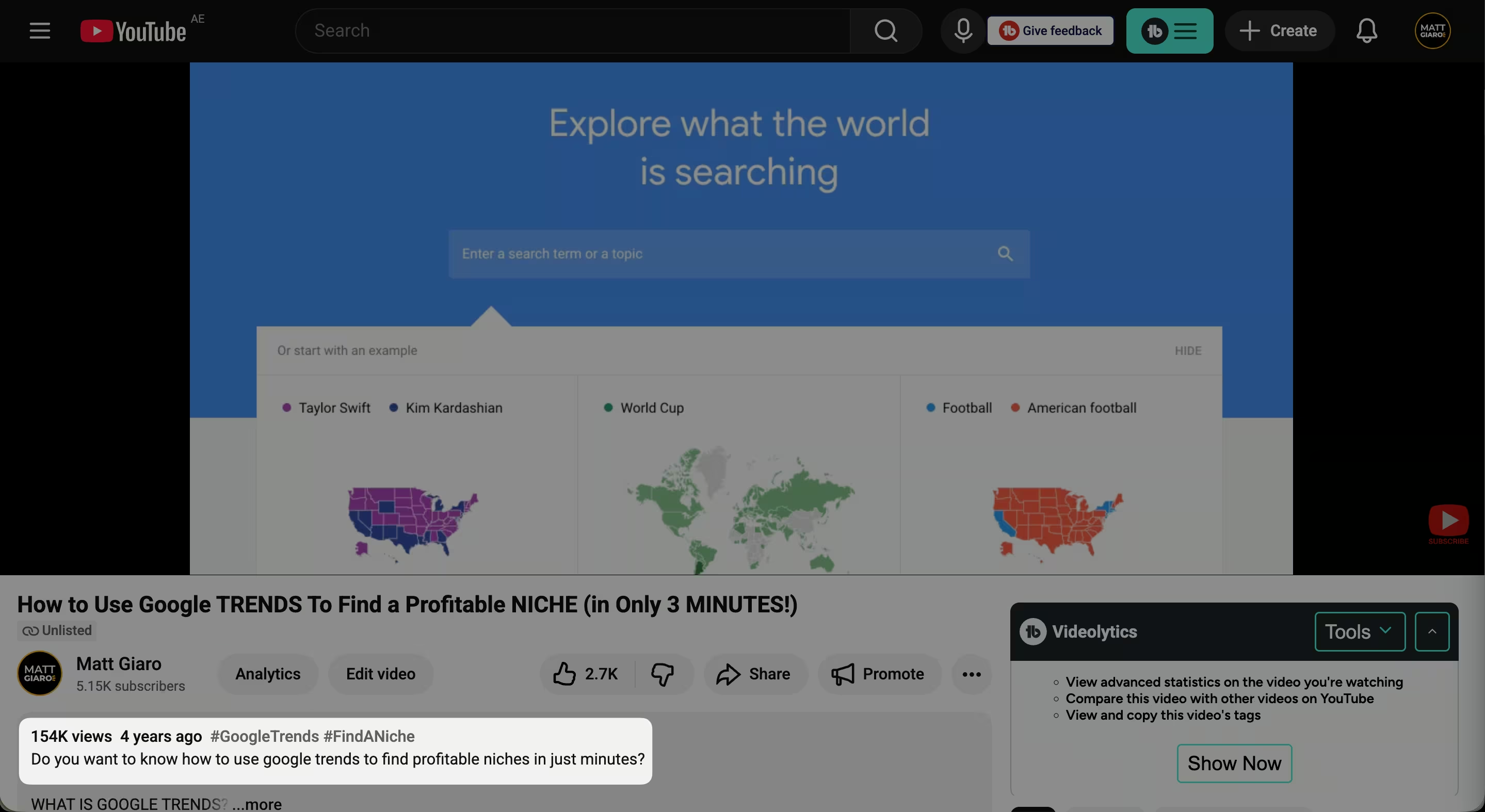
I have a YouTube video with over 160,000 views that generated zero customers. Zero.
And I have videos with under 3,000 views that brought in thousands of dollars in course sales.
If I had made decisions based on view counts — which is what most creators do — I would have doubled down on the viral content and killed the content that was quietly making money.
The same pattern holds across every channel. The content that looks successful by platform metrics (views, likes, shares) and the content that actually produces revenue are rarely the same.
How to Track Which Content Actually Drives Paying Subscribers
Stop relying on platform metrics to tell you what's working. You need a system that tracks the full chain: which content piece brought which subscriber, and whether that subscriber bought.
There are a few ways to approach this:
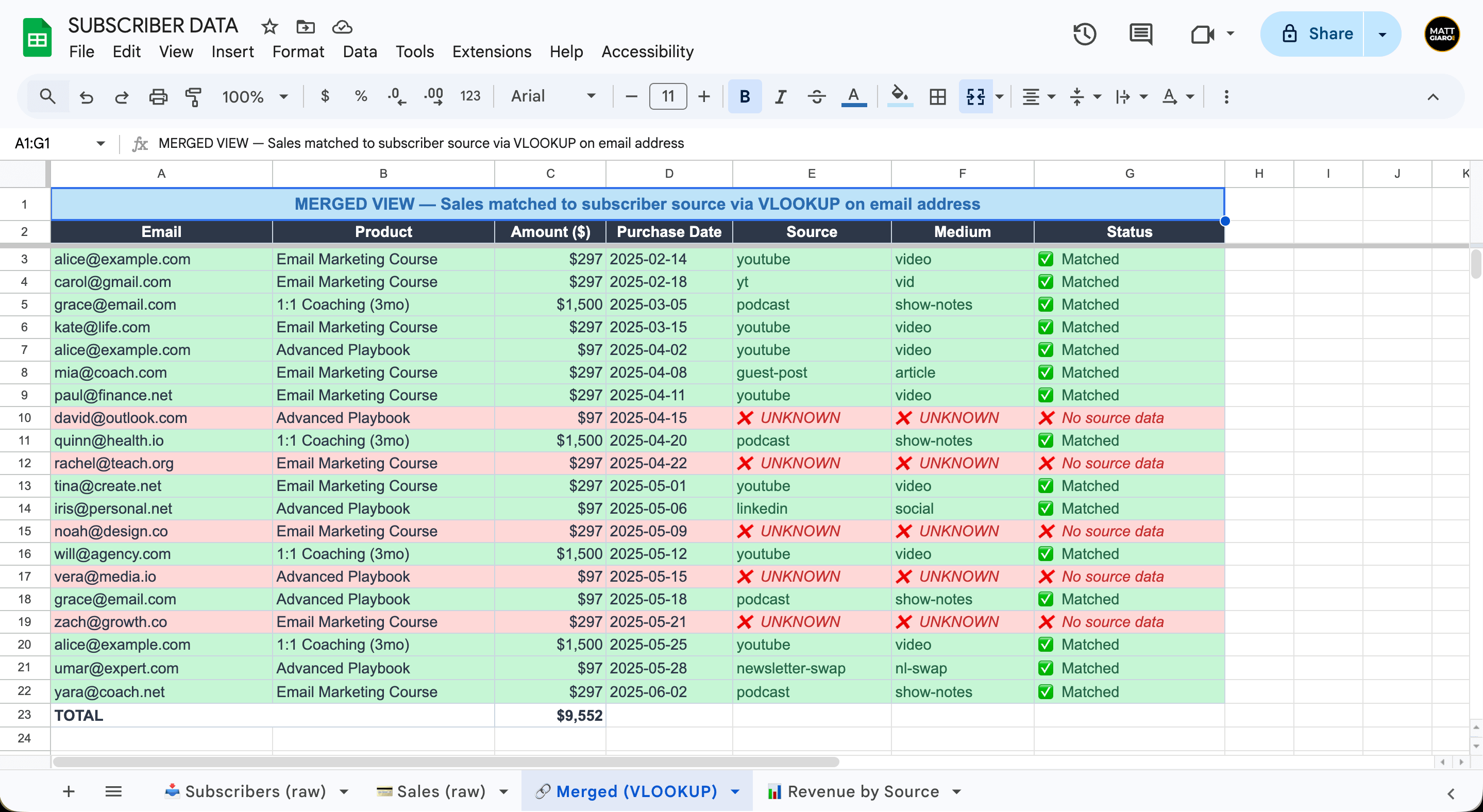
The manual way: Set up UTM parameters for every link you share. Log every email signup in a spreadsheet. Cross-reference subscriber emails against your payment processor. This works in theory. In practice, it breaks constantly — a missed tag, a formula error, a subscriber using a different email to purchase. Expect roughly 60% accuracy at best.
The enterprise way: Tools like SegMetrics ($57–$397/month) or Hyros ($230+/month with a 12-month contract) track attribution at scale.
They're built for businesses running complex paid ad funnels with marketing teams. Powerful — but overkill and overpriced for a solo creator with a blog, an email list, a few digital products.
That's why I built BestSubscribers.
It's a content attribution tool built specifically for solo creators who grow through organic content and sell through email.
You:
- connect your email platform (Kit, MailerLite, etc.)
- connect your payment processor (Stripe, Teachable, or others)
- install a lightweight snippet on your site. Setup takes ~15 minutes.
After that, every subscriber gets automatically tracked back to the exact content piece that brought them in — and you can see which ones turned into buyers.
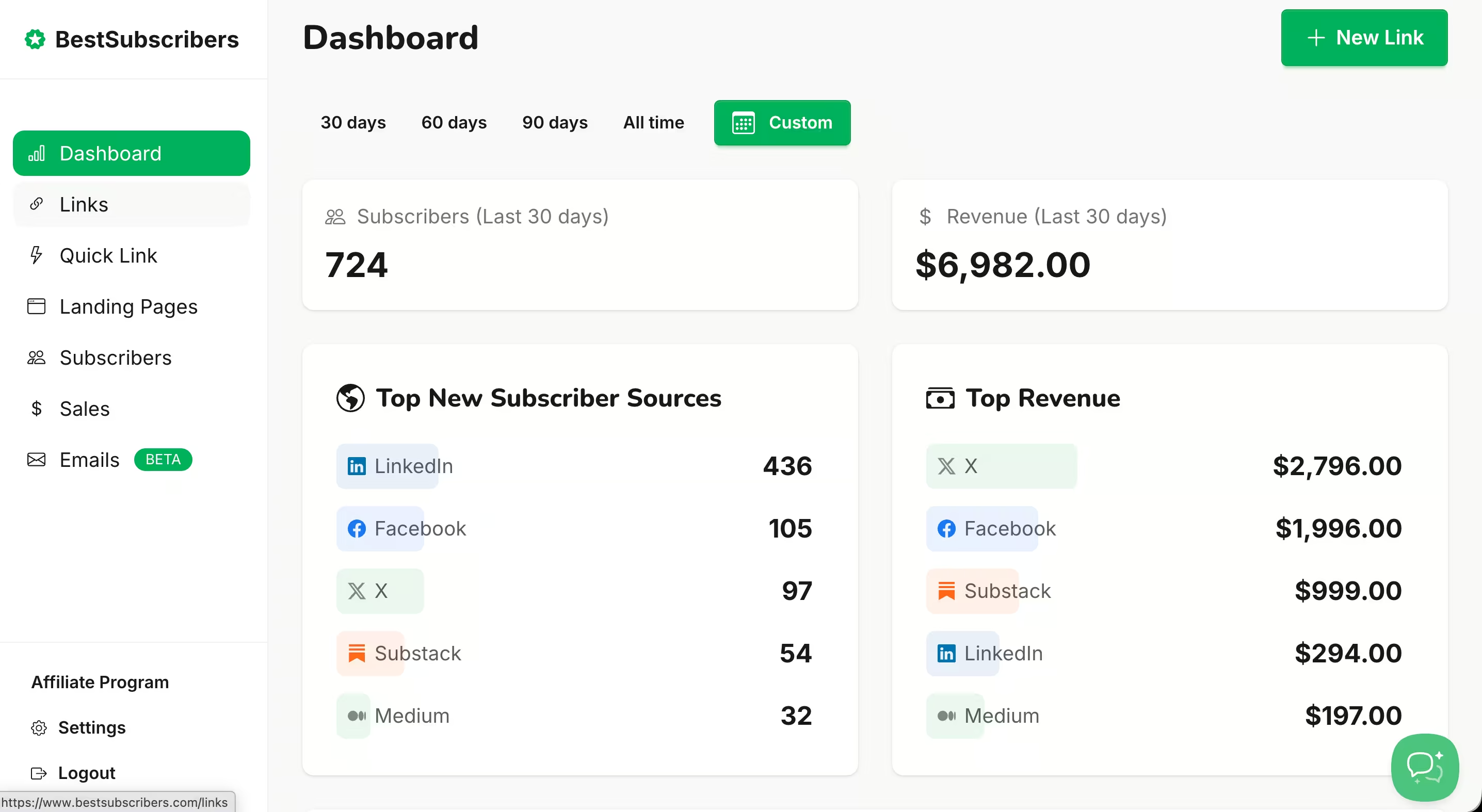
It costs $19/month (early adopter pricing), with no contracts and a 14-day free trial.
The goal is simple: stop guessing which content is working and start seeing it.
Start With Measurement, Then Optimize
The standard advice is to try every content type and see what sticks.
That advice isn't wrong — but it skips the most important step.
Before you create more content, before you tweak another popup or redesign another landing page, answer this: do you actually know which content you've already published brings in subscribers who buy?
If the answer is no, that's where you start.
Every month without that data, you're making content decisions based on feelings — not evidence. You might be spending 10 hours a week on a platform that drives zero revenue, while ignoring the channel that's quietly responsible for 80% of your sales.
One dashboard. One answer: which content makes you money.
Start your free 14-day trial →
Webinars and live workshops have the highest raw conversion rates, typically 20–40% of registrants. For evergreen content, blog posts with content-specific lead magnets convert at 10–15%. Generic "subscribe to my newsletter" forms on any content type convert at roughly 0.5%.
Your email platform doesn't track this natively. You either need to set up UTM parameters manually for every link (time-intensive, roughly 60% accurate), or use a content attribution tool like BestSubscribers that automatically tracks each subscriber back to the specific content piece that brought them in.
It can — but social media subscribers tend to come in spikes rather than steady streams, and on average convert to buyers at lower rates than search-driven or referral-driven subscribers. The creators who make it work consistently deliver standalone value in their posts before pitching the email list as the natural next step.
No. Blogs still outperform most other channels for sustained email list growth because they compound over time through search traffic. A blog post published today can still bring in subscribers two years from now. Social posts disappear within hours. The key is writing content that matches what your target audience is actively searching for.
It varies wildly depending on your niche, video quality, and how clearly you direct viewers to your landing page. Creators who include a compelling lead magnet and pin the link in the first comment typically convert 2–5% of their views into email subscribers. But the more important metric isn't how many subscribers YouTube sends — it's which of those subscribers eventually buy.
The best lead magnets are specific to the content someone just consumed. A generic ebook converts at 1–3%. A checklist or template that directly helps the reader take the next step on the topic they were already reading about converts at 10–15%+. Match the lead magnet to the content, and conversion rates increase dramatically.

Ready to see which content makes you money?
Stop guessing. Start tracking content to revenue.
Start Free Trial